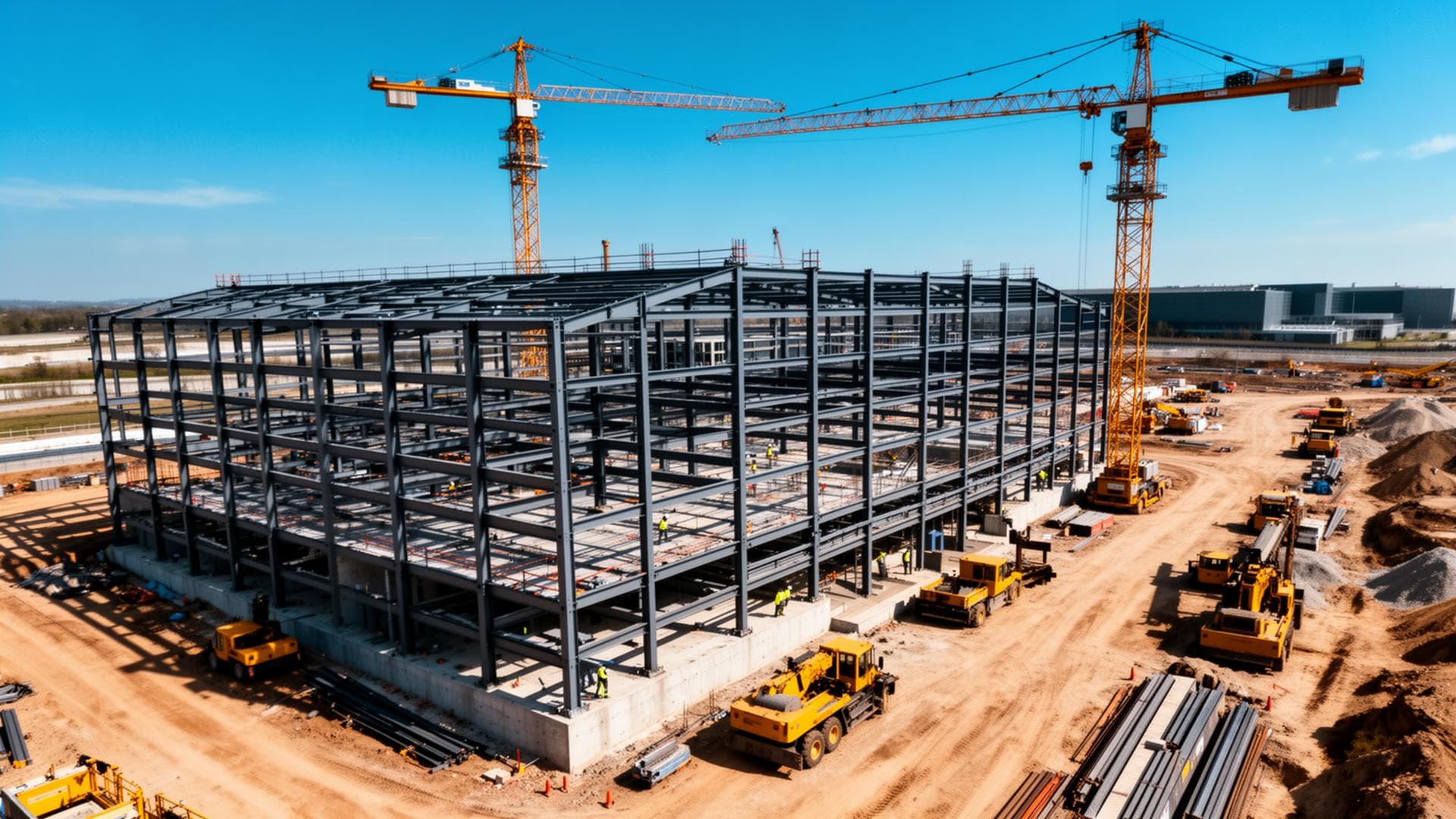
From new construction wiring to panel upgrades and power distribution systems, our certified electricians deliver safe, code-compliant electrical solutions for any project.
With 18+ years of experience across the Gulf region, our teams bring the expertise, equipment, and discipline to execute your electrical work project to the highest standards — on schedule and within budget.
Electrical systems are the foundational infrastructure of every modern building — delivering power to equipment, lighting every space, protecting lives through earthing and fire detection interfaces, and increasingly controlling everything from HVAC to access management through smart building technologies. Bright Line Gulf provides comprehensive electrical contracting services for residential, commercial, industrial, and infrastructure projects across Saudi Arabia and the GCC. Our licensed electrical engineers and certified electricians design and install electrical systems that are safe, code-compliant, energy-efficient, and built to serve reliably throughout the building's operational lifetime.
Our electrical engineering capability begins with load schedule preparation and single-line diagram (SLD) development — the foundational documents that define the entire electrical distribution hierarchy from the main incoming supply through medium voltage (MV) switchgear, MV-LV transformers, main distribution boards (MDB), sub-distribution boards (SDB), and final circuit wiring to every socket outlet, lighting point, and equipment connection. Correct load schedule preparation is critical: it determines conductor sizing, protection device ratings, transformer capacity, and ultimately whether the installed system will handle the building's actual operational demand without overloads, nuisance tripping, or voltage regulation problems.
We execute every phase of electrical installation: MV cable pulling and termination, transformer installation, MV/LV switchgear installation and testing, distribution board assembly and wiring, cable containment including trays, ladders, conduits, and trunking, cable pulling and termination, lighting fixture installation, socket and switch installation, earthing and bonding systems, lightning protection systems, and electrical testing including insulation resistance, loop impedance, earth electrode resistance, and RCD testing. All works are executed in compliance with IEC 60364 (or NFPA 70 for ARAMCO/US-standard projects), Saudi Electricity Company (SEC) regulations, and client-specified standards.
Energy efficiency in electrical systems is a growing priority for building owners and operators across the GCC as electricity tariffs increase and sustainability reporting requirements expand under Vision 2030 frameworks. Bright Line Gulf designs electrical systems with energy efficiency as a core objective — specifying LED lighting with appropriate luminous efficacy, daylight sensing, and occupancy-based switching; power factor correction systems to reduce reactive power penalties; sub-metering systems to enable energy consumption tracking by floor, tenant, or equipment category; and intelligent distribution boards with energy monitoring capabilities. These measures reduce operational electricity costs, support sustainability reporting, and improve the building's energy performance rating.
Medium voltage electrical infrastructure installation for commercial and industrial facilities connecting to the Saudi Electricity Company at 11kV or 33kV supply voltage: ring main unit (RMU) or indoor MV switchgear installation and testing, MV power cable pulling, termination with heat-shrink or cold-shrink accessories, and high-voltage withstand testing, dry-type or oil-immersed transformer installation with oil commissioning and DGA baseline sampling for oil-filled units, MV protection relay setting in accordance with the system protection coordination study, SEC-approved metering panel and instrument transformer installation, and management of the SEC commissioning procedure and energisation permit process from substation commissioning certificate to first energisation.
Assembly, installation, and wiring of the complete LV distribution hierarchy from the main low-voltage distribution board (MLVDB) fed from the transformer LV terminals, through main distribution boards (MDB) at each building, sub-distribution boards (SDB) at each floor or zone, and final distribution boards (FDB) serving individual areas and tenancies. Every distribution board is specified with circuit breakers selected for the correct rated current and interrupting capacity, discrimination between upstream and downstream protection devices confirmed by coordination study, residual current devices (RCDs) where required by code for socket circuits and wet area circuits, surge protection devices (SPDs) at main distribution points, and metering modules where sub-metering is specified. All boards are factory-built or site-assembled, tested for continuity and insulation before energisation, and labelled with circuit directories.
Complete cable containment installation covering all route types required by the building's electrical distribution layout: heavy-duty cable tray and ladder rack on open cable routes in plant rooms, ceiling voids, and risers; steel conduit in-wall and in-slab for concealed circuits in final distribution; cable trunking for surface-mounted distribution in industrial and commercial areas; and cable duct systems in raised access floors for office environments with frequent layout changes. Cable pulling, dressing, and termination for power cables from 1.5mm² twin-and-earth through to multi-core 240mm² MV cables, with every cable identified at both ends by permanent ferrule or cable marker, and every termination recorded on the as-installed cable schedule. Cable route planning coordinated with HVAC, plumbing, and low-current services from early design stage to eliminate corridor conflicts.
Lighting design and installation service covering the complete project lifecycle from initial luminaire layout and lux level calculation through to final commissioned and measured lighting system. Lighting design applies CIBSE Lighting Guide recommendations for maintained illuminance, uniformity ratio, glare rating (UGR), and colour rendering index (CRI) for each space type — office, retail, warehouse, car park, healthcare, or outdoor. LED luminaire selection optimises luminous efficacy (lm/W), useful life (L80 hours), and colour temperature for each application. Lighting controls from simple PIR occupancy switching through DALI addressable dimming systems to KNX-integrated scene control for hospitality and corporate headquarters environments are designed and installed as part of the complete lighting package. Emergency lighting to BS 5266 or NFPA 101 with maintained and non-maintained luminaire selection, duration testing, and logbook commissioning.
Comprehensive earthing and bonding system design and installation covering the fundamental safety requirement of every electrical installation — ensuring that under any fault condition, fault current is diverted safely to earth, fault loop impedance is low enough to operate protective devices within the disconnection time required by the code, and all metalwork in the building is at the same potential to prevent touch voltages. System design follows IEC 60364-5-54 for low-voltage earthing arrangements and IEC 62305 for lightning protection risk assessment and system design. Installation scope includes driven earth electrodes or earth mat for the main earthing terminal, copper earth bars at each distribution board, protective conductors sized for the circuit's fault current, supplementary bonding of metalwork in bathrooms and kitchens, structural lightning protection air termination network, down conductors, and earth termination with measured and documented earth electrode resistance values.
Emergency and standby power infrastructure for buildings and facilities where utility supply interruptions would cause safety risks, operational losses, data integrity failures, or healthcare continuity impacts. UPS systems in online double-conversion topology for server rooms, data centres, control rooms, and medical equipment — providing true zero-transfer-time switchover with voltage and frequency conditioning that protects sensitive loads from all utility power quality problems. Standby diesel generators with automatic mains failure (AMF) panels for partial or whole-building backup — generator sizing based on essential load schedule with provision for starting current of largest motor loads, acoustic enclosure for installations near occupied areas, fuel tank with defined autonomy period, and automatic weekly test run programming. Static transfer switch (STS) panels for seamless transfer between utility and generator supplies for critical IT loads requiring sub-20ms transfer.
Automatic power factor correction (APFC) panel design and installation to maintain the building's measured power factor above the SEC threshold — typically 0.90 lagging — and avoid the reactive energy charges that appear on utility bills when power factor falls below this threshold. APFC panels use microcontroller-based power factor controllers to switch capacitor banks in and out automatically as reactive power demand varies, maintaining the target power factor across the full range of the building's operating load. For buildings with significant variable frequency drive (VFD) loads, LED driver loads, or UPS systems that draw non-sinusoidal current from the supply, harmonic current analysis identifies the distortion levels at each distribution point, and passive or active harmonic filters are specified and installed where total harmonic distortion (THD) exceeds the IEC 61000 limits that cause overheating of neutral conductors, transformers, and sensitive equipment.
Every electrical installation completed by Bright Line Gulf undergoes a structured inspection and testing programme before energisation and handover, ensuring compliance with IEC 60364-6 and the SEC Technical Requirements that must be met for the utility connection application. Pre-energisation testing covers visual inspection of every installed component, continuity testing of all protective conductors and ring circuit conductors using a low-resistance ohmmeter, insulation resistance testing of all installed cables and distribution board busbars using a calibrated 500V or 1000V megger with results documented per circuit, and earth electrode resistance measurement at every new earth electrode using the fall-of-potential or stakeless method. Post-energisation testing confirms earth fault loop impedance at each distribution board, prospective short-circuit current measurement, RCD operating time and current testing at every protected outlet, and functional testing of all isolators, interlocks, and emergency stop systems. Complete test certificates are submitted with the SEC connection application and provided to the client and municipality authority for occupancy permit processing.
We prepare single-line diagrams and load schedules for client approval.
Conduits, cable trays, and trunking are installed before pulling cables.
Switchboards, DBs, and fixtures are mounted and wired.
Megger tests, loop testing, and utility authority inspection.
Electrical design and installation in Saudi Arabia operates within a regulatory framework that requires specific professional licences — the SEC licensed engineer whose stamp appears on the single-line diagram and load schedules bears professional liability for the design's compliance with applicable codes and the SEC Technical Requirements, and electricians performing installation work must hold valid trade licences issued or recognised by the Saudi Electricity Company and GAMEP. Bright Line Gulf employs licensed electrical engineers and registered electricians in the proportions required for the scope and scale of projects we execute, ensuring that every design submission, installation activity, and testing declaration carries the professional authority required for authority acceptance. This professional licencing framework means your project passes the SEC connection application, municipality electrical inspection, and final authority sign-off without the submission rejections and re-inspection delays that result from unlicensed or unqualified submissions — and that the electrical completion certificate issued at the end of the project is legally valid for the occupancy permit process.
Electrical code compliance in Saudi Arabia requires navigating a matrix of overlapping standards — the Saudi Building Code's electrical provisions, SEC Technical Requirements that govern utility connection and metering, IEC 60364 for low-voltage installation design, IEC 60079 for hazardous area classified installations, NFPA 70 (the National Electrical Code) for projects under ARAMCO, Royal Commission, Marafiq, or other US-standard clients, and project-specific client engineering standards that may impose additional requirements beyond the applicable code. Bright Line Gulf has the technical depth to design and install correctly to whichever combination of standards applies to your specific project — our engineers are familiar with both the IEC and NFPA code families, our quality plan identifies the applicable standards at project start and maps every design and installation activity to the relevant code requirement, and our QC inspection records document compliance at every stage with the specific clause references that authority inspectors and client technical reviewers require.
The conventional view of electrical systems as passive infrastructure that simply delivers power to connected loads is being replaced, particularly in commercial and institutional buildings in Saudi Arabia, by an understanding that intelligent electrical infrastructure — with sub-metering, power quality monitoring, smart distribution, and automated load management — delivers measurable and ongoing financial value through energy cost reduction, utility penalty avoidance, and maintenance cost optimisation. Bright Line Gulf designs and installs energy-intelligent electrical systems: sub-metering panels that measure electricity consumption by tenant, floor, department, or major equipment category and feed data to a building energy management dashboard; automatic power factor correction panels that maintain the building's power factor above the utility's threshold and avoid reactive power penalties; harmonic filtering for buildings with large VFD, UPS, or LED driver loads that would otherwise pollute the electrical supply and cause overheating; LED lighting with DALI or KNX controls enabling scene setting, daylight harvesting, and occupancy-based dimming; and smart distribution boards with integrated energy meters and remote monitoring capability.
The electrical scope of a medium or large construction project — spanning MV substation installation, LV distribution infrastructure, lighting and power, earthing, lightning protection, and the interfaces with mechanical and low-current systems — is sufficiently complex and sufficiently inter-dependent that splitting it across multiple specialist contractors creates accountability gaps, coordination failures, and programme conflicts that are predictable and preventable. When the MV contractor, the LV contractor, and the lighting contractor each have their own programme and their own subcontract, cable routing conflicts are discovered late when containment is already installed, the cause of testing failures is disputed between contractors, and the authority submission responsibility falls into a gap between contracts. Bright Line Gulf takes single-contract responsibility for the complete electrical scope from incoming supply point to final connected load: MV infrastructure, LV distribution, cable containment and wiring, lighting, power outlets, earthing, lightning protection, authority coordination, and full testing and commissioning — with one project manager accountable for the programme, quality, and handover of the entire electrical installation.
Get a free quote from our team. We respond within 24 hours and offer transparent pricing with no hidden costs.