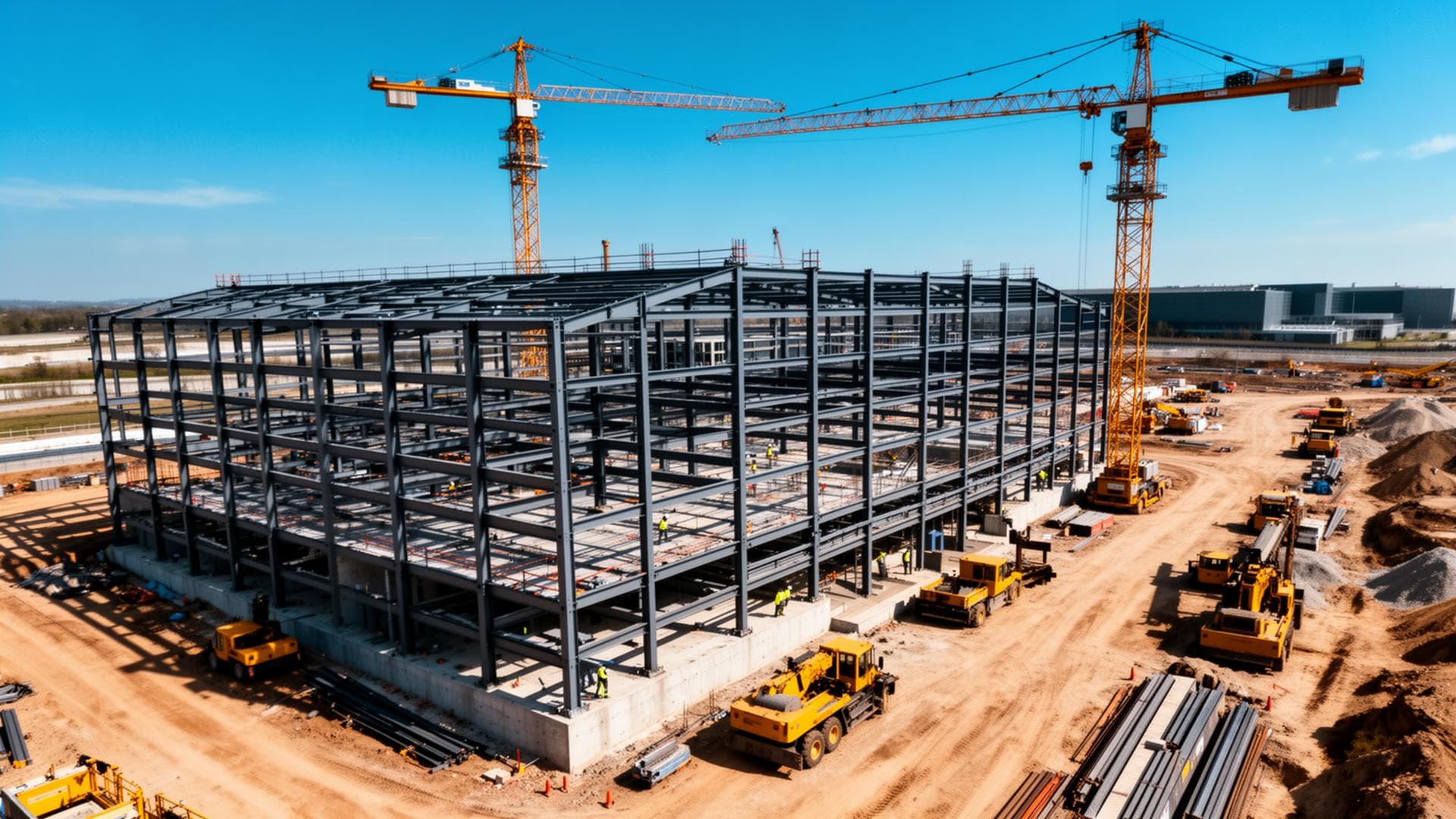
We design and install low-voltage systems including structured cabling, fire detection and alarm, CCTV surveillance, access control, intercom, and public address systems.
With 18+ years of experience across the Gulf region, our teams bring the expertise, equipment, and discipline to execute your low current services project to the highest standards — on schedule and within budget.
Low current — also known as extra-low voltage (ELV) or intelligent building systems — has evolved from simple fire alarm and intercom installations into a sophisticated ecosystem of interconnected technologies that make modern buildings safer, smarter, and more manageable. Bright Line Gulf designs and installs the complete spectrum of low current systems for commercial, residential, institutional, and industrial facilities across Saudi Arabia and the GCC. Our dedicated ELV engineering team brings deep expertise in system integration, IP networking, and the specific application requirements of each low current discipline — from fire detection life safety to enterprise-grade structured cabling infrastructure.
Structured cabling forms the foundation of every modern building's digital infrastructure. A properly designed and installed cabling plant — using Cat6A copper or single-mode fibre backbones, compliant termination hardware, and rigorous test verification — supports the building's data, voice, CCTV, access control, and building automation traffic for the next 20+ years. Bright Line Gulf designs structured cabling systems to TIA-568 and ISO/IEC 11801 standards, installs them with precision, and tests every link with certified cable analysers to guarantee performance. We provide full test results and system certification documentation that satisfies the warranty requirements of major structured cabling manufacturers.
Fire detection and alarm systems are life safety systems — their reliability is non-negotiable. We design fire detection and alarm systems to NFPA 72 and BS 5839 standards, selecting appropriate detector types (smoke, heat, multi-sensor, beam), manual call points, alarm sounders, and visual alarm devices for each area of the building based on occupancy classification and fire risk assessment. All systems are installed with full zonation and evacuation sequences programmed, tested, and witnessed by Saudi Civil Defence authority inspectors before occupancy is permitted. We also design and install aspirating smoke detection (ASD) systems for early warning in server rooms, heritage buildings, and critical infrastructure where conventional detectors are not appropriate.
Access control and CCTV systems have converged onto IP-based platforms that integrate seamlessly with building management systems, visitor management, and HR access rights administration. Bright Line Gulf designs and installs enterprise-grade access control systems using proximity, smart card, biometric fingerprint, and facial recognition reader technologies, connected to server-based or cloud-hosted access management platforms. CCTV systems use IP cameras with H.265 encoding, network video recorders (NVR), and video management software (VMS) with analytics capabilities including motion detection, perimeter intrusion, and licence plate recognition for car park and entry management. Systems are designed for cybersecurity compliance with network segmentation, encrypted communications, and role-based access rights management.
Design and installation of enterprise-grade structured cabling infrastructure serving all horizontal and backbone distribution requirements: Cat6A shielded or unshielded horizontal cabling from telecommunications rooms (TRs) to work area outlets, supporting 10GBASE-T to 100 metres for future-proof bandwidth headroom; OM4 or OM5 multimode fibre for intra-building backbone connections between TRs and the main distribution facility (MDF) supporting 40G and 100G transceiver applications; OS2 single-mode fibre for inter-building and campus backbone links; modular patch panels in 1U and 2U configurations for tidy port management and circuit documentation; and network equipment racks and cabinets with structured cable management, blanking panels, and proper airflow organisation. Complete TIA-568 Cat6A channel testing at every port with Fluke DSX-8000 and full test report dossier provided at handover.
Intelligent addressable fire alarm system design and installation for commercial, institutional, and industrial buildings, providing the precise device-level fault and alarm location identification that reduces false alarm investigation time, enables pre-alert logic for alarm confirmation before full building evacuation, and simplifies fault diagnosis by the maintenance team. System design to NFPA 72 and Saudi Civil Defence requirements selects appropriate detector types for each area: photoelectric smoke detectors for slow-smouldering fires in office and storage areas, fixed or rate-of-rise heat detectors for high-humidity or dusty environments where smoke detectors would produce false alarms, multi-sensor combination detectors for areas with mixed risk profiles, and manual call points at all exit routes and fire points. System integration with fire suppression release, HVAC smoke control, staircase pressurisation, elevator recall, magnetic door hold-open release, and PA/voice evacuation systems is programmed and commissioned as part of the life safety system package.
Very early warning aspirating smoke detection (VESDA or equivalent ASD) system design and installation for high-value environments where conventional point smoke detectors are unsuitable due to airflow patterns, ceiling height, or the need for pre-fire detection at smoke concentrations far below the level that activates conventional detectors. Server rooms and data centres benefit from ASD because rack-mounted equipment airflow patterns prevent smoke from reaching ceiling-mounted point detectors quickly enough; the ASD sampling network draws air continuously from within and around equipment racks, detecting thermal degradation smoke at the alert level before any equipment damage has occurred. Heritage buildings, museums, and art storage facilities benefit from the invisible sampling pipe installation that requires no drilling of historic fabric. Clean rooms benefit from the absence of intrusive ceiling-mounted detector housings that would disrupt laminar airflow patterns.
Enterprise IP video surveillance system design and installation using the latest generation of IP cameras with 4K ultra-high-definition resolution, wide dynamic range (WDR) for entrances and areas with mixed lighting, low-light or IR-illuminated cameras for car parks and perimeter areas, 360-degree panoramic cameras for large open areas requiring full coverage from a single mounting point, and PTZ cameras with auto-tracking for security management centre applications. Network video recorder (NVR) platforms or hybrid cloud/on-premise video management software (VMS) with intelligent video analytics modules including perimeter intrusion detection, abandoned object detection, crowd density monitoring, facial recognition with watchlist matching, and automatic number plate recognition (ANPR) for car park and site entry management. PoE network switches, UPS backup for cameras and recording equipment, and structured cabling or fibre backbone to every camera location included as standard.
Multi-door and multi-site access control system design and installation using contemporary IP-based access control platforms that integrate credential management, audit trail logging, visitor management, and HR access rights administration in a unified software environment. Credential technology options include proximity cards and fobs (125kHz EM4100 or MIFARE DESFire), smart cards with encrypted credential storage for high-security applications, biometric fingerprint readers for areas requiring positive personal identification, facial recognition terminals for hands-free access at high-traffic doorways, and mobile credential solutions using Bluetooth LE or NFC for smartphone-based access. Door hardware scope includes electromagnetic locks, electric strike releases, motorised mortice locks, door position sensors, and request-to-exit (REX) devices at every controlled door, with all hardware specified for the door's duty cycle, fire rating, and access direction requirements.
Public address and voice evacuation system design and installation to the life safety performance requirements of BS 5839 Part 8, EN 54-16, and NFPA 72 Chapter 24 for emergency voice communication systems — distinguishing carefully between background music and general announcement systems that are not life safety systems, and voice evacuation systems that are classified as life safety systems and must comply with the higher availability, intelligibility, and Civil Defence approval requirements. Life safety PAVA systems are designed with zone amplifier redundancy, supervised speaker lines with line fault monitoring, battery backup to the required duration, pre-recorded and live microphone evacuation message capability, priority override that interrupts all background content when a fire alarm is activated, and speech intelligibility verified by STI (speech transmission index) measurements at commissioning in representative locations throughout the building.
Building management system design, installation, programming, and commissioning for commercial and institutional buildings requiring centralised monitoring, control, and optimisation of multiple building services. BMS scope typically integrates HVAC control including chiller plant sequencing, AHU supply air temperature and pressure control, FCU room temperature control, and VAV zone control; lighting control for common areas and external lighting; energy sub-metering with dashboard reporting and alerting; access control system monitoring; fire alarm status monitoring for HVAC smoke control coordination; and fault alarm management with email or SMS notification. Open-protocol system architecture using BACnet IP and BACnet MS/TP, Modbus TCP/RTU, or KNX is specified to prevent proprietary lock-in and ensure that equipment from different manufacturers can be integrated into a single operator interface without gateway translation layers.
Complete build-out of server rooms and small to medium data centres within commercial buildings, covering every layer of the physical infrastructure from civil works through to operational handover: raised access floor installation or cable management provisions under-slab; structured cabling including Cat6A horizontal to equipment racks and OS2 fibre between MDF and IDF positions; hot aisle and cold aisle containment to prevent conditioned air bypass and hot air recirculation; in-row precision cooling units sized for the IT load with N+1 redundancy; intelligent power distribution units (iPDUs) with per-outlet current monitoring; UPS systems in online double-conversion topology with battery runtime matched to generator start and transfer time; environmental monitoring sensors for temperature, humidity, water detection, and smoke at rack level; physical security including biometric access control, CCTV coverage of all aisles, and tamper detection; and DCIM (Data Centre Infrastructure Management) platform for real-time capacity, power, and cooling monitoring.
We design device layout, cable routes, and system architecture per standards.
Concealed conduits are installed during construction; cables pulled and terminated.
Cameras, detectors, panels, and access devices are mounted and wired.
Systems are configured, tested, and handed over with user training.
The traditional approach to low current systems — commissioning separate contractors for structured cabling, fire alarm, access control, CCTV, public address, and BMS, each running their own independent cabling infrastructure with separate conduit routes, separate network equipment, and separate maintenance contracts — produces buildings that are more expensive to build, more complex to maintain, and less capable of the automated responses that make intelligent buildings genuinely useful. Bright Line Gulf designs all low current systems with integration as the primary architectural objective: a converged IP network infrastructure carries data, CCTV, access control, IP telephony, and BMS traffic over a shared, properly segmented network; fire alarm, access control, and CCTV systems are programmed with integrated responses — doors release on fire alarm activation, CCTV records on access events, BMS shuts down HVAC on fire detection; and a single field service team maintains all systems under one annual maintenance contract, eliminating the finger-pointing between separate contractors when a system fault spans multiple disciplines.
Fire alarm and fire suppression systems are life safety systems whose design, installation, and commissioning is regulated by Saudi Civil Defence, and the approval process — design submission, review, comment resolution, construction inspection, and final commissioning with Civil Defence engineers present — is the critical path activity that determines when an occupancy permit can be issued for a new building. Bright Line Gulf manages this entire process in-house through our licensed fire protection engineers who are familiar with the Civil Defence review process and the specific technical requirements that local inspectors enforce — requirements that sometimes diverge from the published NFPA 72 code and that can cause repeated design revisions if the submitting engineer is not experienced with them. We prepare the design submission in the Civil Defence format, respond to review comments within their response deadline, coordinate the construction inspection visits, and manage the final commissioning demonstration with Civil Defence engineers — taking this high-risk regulatory pathway off your project management plate entirely.
A structured cabling installation that is not properly tested and certified provides no reliable basis for the system performance warranties that protect you against the cost of recabling a building when bandwidth requirements increase — and in the GCC market, installations that pass visual inspection but fail independent link testing are unfortunately common. Bright Line Gulf installs structured cabling systems to TIA-568 Category 6A and ISO/IEC 11801 Class EA performance standards and tests every installed link with calibrated Fluke Networks DSX-8000 or equivalent cable analysers carrying current calibration certificates — instruments that measure all critical transmission parameters (insertion loss, NEXT, PS-NEXT, ELFEXT, PS-ELFEXT, return loss, and propagation delay skew) against the specified performance limits and automatically generate pass/fail certificates. The complete test results for every port in the building — typically thousands of individual link test records on a large installation — are provided to the client on handover. On the basis of this documented test compliance, we offer 15 to 25 year system performance warranties backed by major cabling system manufacturers.
The migration of CCTV and access control systems from analogue, proprietary hardware to IP-networked platforms has created a serious and widely under-appreciated cybersecurity risk in building security infrastructure — IP cameras and access control servers that are placed on flat, unsegmented networks with default passwords and no firmware update policy become entry points for network intrusion, as demonstrated by multiple high-profile security breaches involving internet-exposed building surveillance cameras. Bright Line Gulf designs IP-based CCTV and access control systems with cybersecurity as a first-order design requirement: camera and access control device VLANs are network-segregated from corporate IT infrastructure with firewall-controlled inter-VLAN routing; default device credentials are changed at commissioning to strong, documented passwords stored in the client's credential management system; all camera streams use encrypted RTSP or SRTP transmission protocols; firmware update procedures are documented and scheduled; and remote access to surveillance systems is provided through VPN with multi-factor authentication rather than port-forwarding to internet-facing addresses.
Get a free quote from our team. We respond within 24 hours and offer transparent pricing with no hidden costs.